Buy team.me.uk ?
We are moving the project
team.me.uk .
Are you interested in purchasing the domain
team.me.uk ?
domain@kv-gmbh.de · 0541-91531010
Buy team.me.uk ?
What is the iteration rule?
The iteration rule is a mathematical concept that defines how to generate the next term in a sequence or series based on the previous term. It is a formula or set of instructions that allows for the repetition of a process to create a pattern or progression. By following the iteration rule, one can continue to generate new terms in the sequence or series, allowing for the exploration of patterns and relationships within the data. **
What is a general iteration method?
A general iteration method is a mathematical technique used to solve equations or find the roots of a function. It involves repeatedly applying a specific formula or process to an initial guess in order to converge towards the solution. The process is typically iterative, meaning it is repeated until a certain level of accuracy is achieved. General iteration methods are widely used in numerical analysis and computational mathematics to solve a variety of problems. **


Similar search terms for Iteration
Top-Angebote
Products related to Iteration:
-
"""Laurent-Perrier Grand Siecle Iteration No. 26 with Gift Box Champagne - France""""""Grand Siècle was born from the vision of Bernard de Nonancourt: to recreate the perfect year, one that nature alone could never deliver. Iteration N°26 embodies this idea, crafted from a masterful blend of three outstanding years – 2012, 2008, and..."279,99 $*Shipping: 0,00 $Secure redirect to the provider
-
"""Laurent-Perrier Grand Siecle Iteration No. 24 (1.5 Liter Magnum) with Gift Box Champagne - France""""""Grand Siècle was born from the vision of Bernard de Nonancourt: to recreate the perfect year, one that nature alone could never deliver. Iteration N°24 embodies this idea, crafted from a masterful blend of three outstanding years – 2007, 2006, and..."679,99 $*Shipping: 0,00 $Secure redirect to the provider
-
MACMILLAN Kim Scott Collection 2 Books Set Radical Respect & Radical Candor – Leadership, Communication & Workplace Culture GuidesThe Kim Scott Collection – 2 Books Set brings together two transformative leadership bestsellers: Radical Respect and Radical Candor. Written by acclaimed workplace expert Kim Scott, these books offer practical, honest, and empowering guidance for building stronger teams, better communication, and healthier workplace cultures. In Radical Candor, Scott introduces her now-famous framework:Care Personally + Challenge Directly.Learn how to deliver feedback effectively, build trust, and lead with clarity without becoming overly harsh or avoiding difficult conversations. In Radical Respect, Scott expands on inclusion, fairness, accountability and anti-bullying frameworks—showing readers how to build workplaces rooted in dignity, psychological safety, and genuine respect. Together, these books provide a complete roadmap for leaders, managers, HR teams and anyone who wants to communicate better, lead with courage, and create workplaces where people thrive.6,99 £*Shipping: 2,99 £Secure redirect to the provider
-
Various Publishers How to Talk to Anyone, Next Conversation & Psychology of Management - 3 Book Paperback Set - Communication, Leadership & Management PsychologyThis 3-book collection set brings together three practical, people-focused reads for anyone who wants to communicate better and lead more effectively. Leil Lowndes' classic 'How to Talk to Anyone' pairs with Jefferson Fisher's 'Next Conversation' and a foundational 'Psychology of Management' title to cover everyday conversation, conflict resolution, and workplace psychology in one bundle. Whether you are prepping for interviews, managing a team, or simply want to feel more confident in social situations, this paperback set offers accessible, actionable guidance you can start using immediately. The set includes 'How to Talk to Anyone' by Leil Lowndes, 'Next Conversation' by Jefferson Fisher, and 'Psychology of Management'.20,99 £*Shipping: 2,99 £Secure redirect to the provider




-
Why does the Picard iteration fail?
The Picard iteration can fail to converge if the fixed-point mapping is not a contraction mapping, meaning that it does not contract the distance between points in the space. This can happen if the mapping has regions of steep slope or if the initial guess is too far from the fixed point. In these cases, the iteration may not converge to the fixed point or may converge very slowly, making it impractical for practical use. Additionally, the Picard iteration may fail if the fixed-point mapping is not continuous or differentiable, as this violates the assumptions required for convergence. **
-
Can someone explain the fixed-point iteration to me?
Sure! Fixed-point iteration is a method used to find the fixed point of a function, which is a point where the function value is equal to the input value. The process involves repeatedly applying the function to an initial guess until the result converges to the fixed point. Mathematically, it can be represented as x_{n+1} = g(x_n), where g(x) is the function being iterated and x_n is the current approximation. Fixed-point iteration is commonly used in numerical analysis to solve equations and find roots of functions. **
-
How does the fixed point iteration work?
Fixed point iteration is a method used to find the fixed point of a function, which is a value that does not change when the function is applied to it. The process involves repeatedly applying the function to an initial guess, and using the result as the next guess. This process continues until the difference between consecutive guesses is smaller than a specified tolerance. The fixed point iteration can be used to solve equations of the form x = g(x), where g(x) is a function. **
-
Is the intersection of interval iteration not empty?
No, the intersection of interval iteration is not empty. When two intervals are iterated, they will eventually converge to a common point, which will be the intersection point. This intersection point is not empty and represents the value where the two intervals meet after iteration. **
How do you solve the fixed-point iteration method?
To solve the fixed-point iteration method, you first need to rearrange the equation you want to solve into the form \(x = g(x)\), where \(g(x)\) is a function that will help you find the solution. Then, you choose an initial guess for the solution, denoted as \(x_0\). Next, you iterate using the formula \(x_{n+1} = g(x_n)\) until the difference between consecutive approximations is smaller than a specified tolerance level. Finally, the last approximation obtained is the solution to the equation. **
What is the difference between collaboration and cooperation?
Collaboration involves individuals or groups working together towards a common goal, often involving shared responsibilities, resources, and decision-making. It requires a higher level of engagement and interaction among participants. On the other hand, cooperation is more about individuals or groups working alongside each other, each contributing their efforts towards a shared objective without necessarily sharing the same level of involvement or decision-making. Cooperation may involve less direct interaction and coordination compared to collaboration. **
Top-Angebote
Products related to Iteration:
-
"""Laurent-Perrier Grand Siecle Iteration No. 27 Champagne - France""""""Grand Siècle was born from the vision of Bernard de Nonancourt: to recreate the perfect year, one that nature alone could never deliver. Iteration N°27 embodies this idea, crafted from a masterful blend of three outstanding years – 2015, 2013, and..."269,99 $*Shipping: 0,00 $Secure redirect to the provider
-
Laurent-Perrier Champagne Brut Grande Cuvée 'Grand Siècle Iteration n. 27'The Champagne Brut Grande Cuvée “Grande Siècle Iteration n. 27” is the jewel of Maison Laurent-Perrier, a masterpiece of balance between finesse, power, and freshness, born from selected grapes of prestigious Grands Crus and the best vintages. Its name evokes the golden age of France, the 17th century, as a tribute to the Sun King, to the apotheosis of the arts, to luxury, and to the origins of modern gastronomy.The Champagne “Grande Siècle” Laurent-Perrier has been produced since 1959, and Grand Siècle is born from the vision of Bernard de Nonancourt: to recreate the perfect vintage, one that nature alone can never provide. It starts from a blend of 3 different vintages, contradicting the idea that the most prestigious Cuvées must consist of a single vintage. Its inventor coined the motto “le meilleur du meilleur avec le meilleur,” because it is born from the blend of the best grapes from the best vintages and coming from the best Grand Cru. These are grapes of Chardonnay and Pinot Noir selected from 9 different Grand Crus."Iteration n.27 Grande Siècle” is presented in a sinuous and refined bottle, inspired by the blown glass creations of the glass masters of the 17th century, used for the first Champagnes that arrived on the table of the King of France. After at least 10 years of aging on the lees, the result is a Champagne that is very complex on the nose, combining freshness, energy, and elegance on the palate. Grand Siècle is never tied to a single vintage, but represents a higher concept: the search for absolute balance between intensity, finesse, and harmony. The final result is exciting and surprising: a rich and complex symphony of aromas and enchanting scents, supported by remarkable freshness and very persistent mineral notes, that one would wish would never end.219,00 £*Shipping: 48,00 £Secure redirect to the provider
-
"""Laurent-Perrier Grand Siecle Iteration No. 26 with Gift Box Champagne - France""""""Grand Siècle was born from the vision of Bernard de Nonancourt: to recreate the perfect year, one that nature alone could never deliver. Iteration N°26 embodies this idea, crafted from a masterful blend of three outstanding years – 2012, 2008, and..."279,99 $*Shipping: 0,00 $Secure redirect to the provider
-
"""Laurent-Perrier Grand Siecle Iteration No. 24 (1.5 Liter Magnum) with Gift Box Champagne - France""""""Grand Siècle was born from the vision of Bernard de Nonancourt: to recreate the perfect year, one that nature alone could never deliver. Iteration N°24 embodies this idea, crafted from a masterful blend of three outstanding years – 2007, 2006, and..."679,99 $*Shipping: 0,00 $Secure redirect to the provider
-
What is the iteration rule?
The iteration rule is a mathematical concept that defines how to generate the next term in a sequence or series based on the previous term. It is a formula or set of instructions that allows for the repetition of a process to create a pattern or progression. By following the iteration rule, one can continue to generate new terms in the sequence or series, allowing for the exploration of patterns and relationships within the data. **
-
What is a general iteration method?
A general iteration method is a mathematical technique used to solve equations or find the roots of a function. It involves repeatedly applying a specific formula or process to an initial guess in order to converge towards the solution. The process is typically iterative, meaning it is repeated until a certain level of accuracy is achieved. General iteration methods are widely used in numerical analysis and computational mathematics to solve a variety of problems. **
-
Why does the Picard iteration fail?
The Picard iteration can fail to converge if the fixed-point mapping is not a contraction mapping, meaning that it does not contract the distance between points in the space. This can happen if the mapping has regions of steep slope or if the initial guess is too far from the fixed point. In these cases, the iteration may not converge to the fixed point or may converge very slowly, making it impractical for practical use. Additionally, the Picard iteration may fail if the fixed-point mapping is not continuous or differentiable, as this violates the assumptions required for convergence. **
-
Can someone explain the fixed-point iteration to me?
Sure! Fixed-point iteration is a method used to find the fixed point of a function, which is a point where the function value is equal to the input value. The process involves repeatedly applying the function to an initial guess until the result converges to the fixed point. Mathematically, it can be represented as x_{n+1} = g(x_n), where g(x) is the function being iterated and x_n is the current approximation. Fixed-point iteration is commonly used in numerical analysis to solve equations and find roots of functions. **
Similar search terms for Iteration
-
MACMILLAN Kim Scott Collection 2 Books Set Radical Respect & Radical Candor – Leadership, Communication & Workplace Culture GuidesThe Kim Scott Collection – 2 Books Set brings together two transformative leadership bestsellers: Radical Respect and Radical Candor. Written by acclaimed workplace expert Kim Scott, these books offer practical, honest, and empowering guidance for building stronger teams, better communication, and healthier workplace cultures. In Radical Candor, Scott introduces her now-famous framework:Care Personally + Challenge Directly.Learn how to deliver feedback effectively, build trust, and lead with clarity without becoming overly harsh or avoiding difficult conversations. In Radical Respect, Scott expands on inclusion, fairness, accountability and anti-bullying frameworks—showing readers how to build workplaces rooted in dignity, psychological safety, and genuine respect. Together, these books provide a complete roadmap for leaders, managers, HR teams and anyone who wants to communicate better, lead with courage, and create workplaces where people thrive.6,99 £*Shipping: 2,99 £Secure redirect to the provider
-
Various Publishers How to Talk to Anyone, Next Conversation & Psychology of Management - 3 Book Paperback Set - Communication, Leadership & Management PsychologyThis 3-book collection set brings together three practical, people-focused reads for anyone who wants to communicate better and lead more effectively. Leil Lowndes' classic 'How to Talk to Anyone' pairs with Jefferson Fisher's 'Next Conversation' and a foundational 'Psychology of Management' title to cover everyday conversation, conflict resolution, and workplace psychology in one bundle. Whether you are prepping for interviews, managing a team, or simply want to feel more confident in social situations, this paperback set offers accessible, actionable guidance you can start using immediately. The set includes 'How to Talk to Anyone' by Leil Lowndes, 'Next Conversation' by Jefferson Fisher, and 'Psychology of Management'.20,99 £*Shipping: 2,99 £Secure redirect to the provider
-
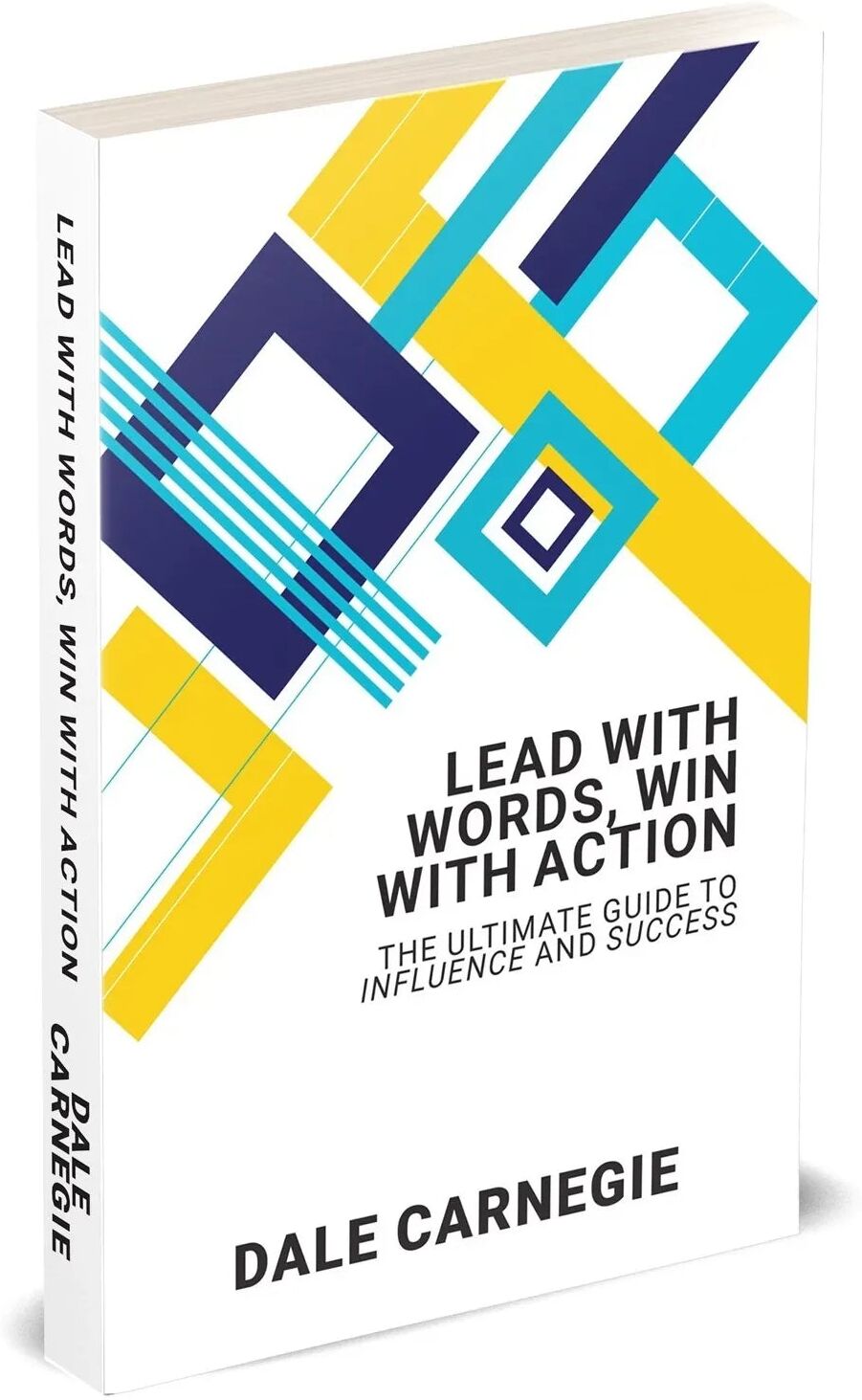
Rupa Publications Lead With Words, Win With Action by Dale Carnegie - Paperback Business & Leadership Self-Help Book - Practical Guide to Influence, CommunicationLead With Words, Win With Action by Dale Carnegie is a practical guide to communicating with confidence and leading with impact. This paperback book distils the enduring principles of Dale Carnegie's philosophy of influence into a modern guide for anyone who wants to build trust, motivate others, and convert conversation into real results. It blends timeless wisdom with actionable strategies for the modern workplace. The book explores how the right combination of language, listening, and follow-through can transform everyday interactions into lasting influence. Chapters cover practical topics such as how to open a conversation, disagree without creating an enemy, and more. Published by Rupa Publications, this book is a concise and energising read for anyone looking to improve their communication skills and leadership abilities.2,99 £*Shipping: 2,99 £Secure redirect to the provider
-
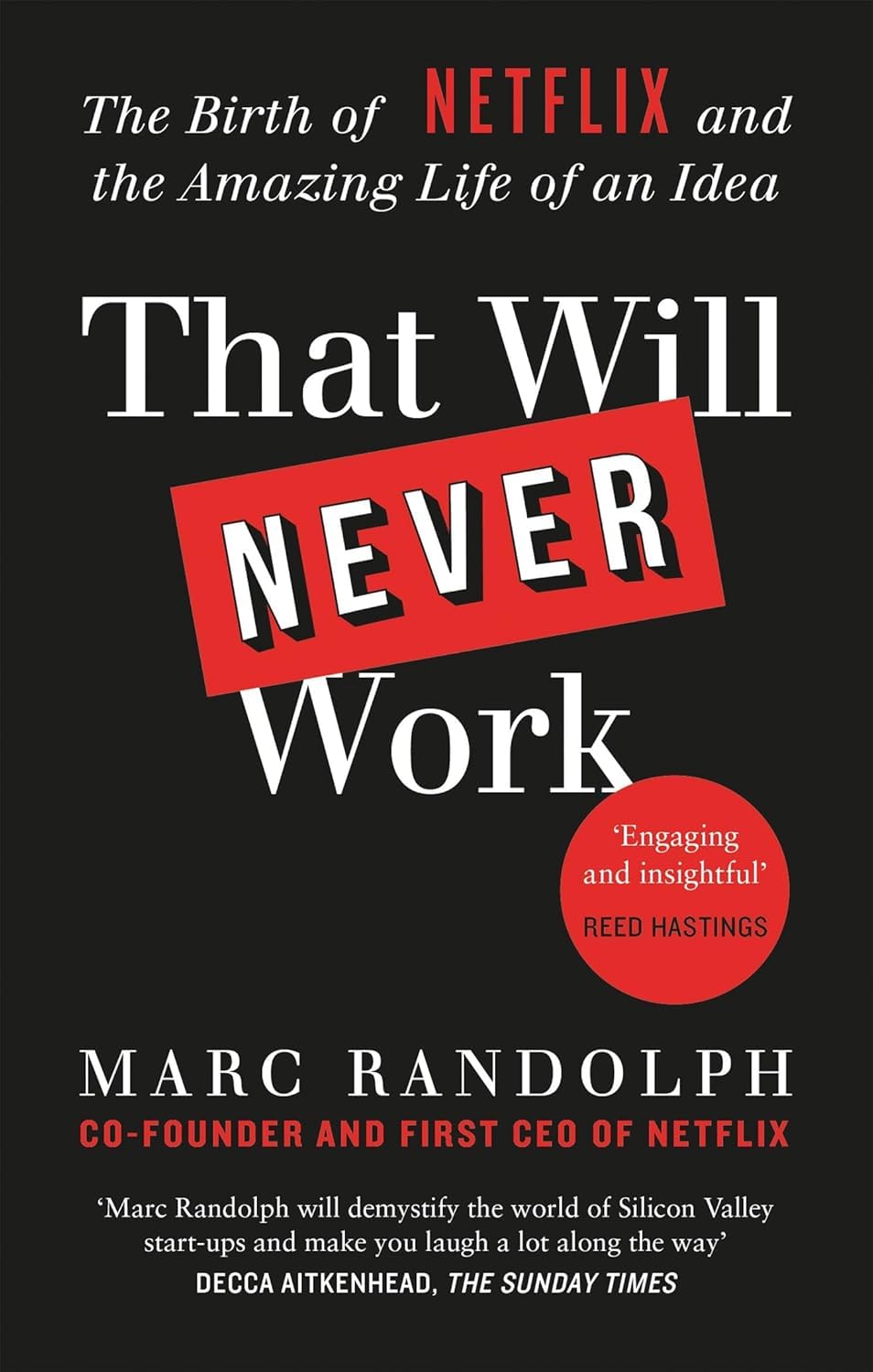
Various Publishers The Diary of a CEO, That Will Never Work & Fierce Conversations 3 Book Paperback Set - Business, Leadership & Communication Skills CollectionThis three-book paperback set brings together some of the sharpest voices in modern business thinking. The set includes The Diary of a CEO, That Will Never Work, and Fierce Conversations. Written by Steven Bartlett, Marc Randolph, and Susan Scott, these books offer timeless lessons from entrepreneurship and thousands of podcast conversations, the extraordinary true story of building Netflix from scratch, and the art of honest, high-impact conversation. Together they form a practical toolkit for anyone building a career, a company, or simply better relationships through clearer communication.29,99 £*Shipping: 2,99 £Secure redirect to the provider
-
How does the fixed point iteration work?
Fixed point iteration is a method used to find the fixed point of a function, which is a value that does not change when the function is applied to it. The process involves repeatedly applying the function to an initial guess, and using the result as the next guess. This process continues until the difference between consecutive guesses is smaller than a specified tolerance. The fixed point iteration can be used to solve equations of the form x = g(x), where g(x) is a function. **
-
Is the intersection of interval iteration not empty?
No, the intersection of interval iteration is not empty. When two intervals are iterated, they will eventually converge to a common point, which will be the intersection point. This intersection point is not empty and represents the value where the two intervals meet after iteration. **
-
How do you solve the fixed-point iteration method?
To solve the fixed-point iteration method, you first need to rearrange the equation you want to solve into the form \(x = g(x)\), where \(g(x)\) is a function that will help you find the solution. Then, you choose an initial guess for the solution, denoted as \(x_0\). Next, you iterate using the formula \(x_{n+1} = g(x_n)\) until the difference between consecutive approximations is smaller than a specified tolerance level. Finally, the last approximation obtained is the solution to the equation. **
-
What is the difference between collaboration and cooperation?
Collaboration involves individuals or groups working together towards a common goal, often involving shared responsibilities, resources, and decision-making. It requires a higher level of engagement and interaction among participants. On the other hand, cooperation is more about individuals or groups working alongside each other, each contributing their efforts towards a shared objective without necessarily sharing the same level of involvement or decision-making. Cooperation may involve less direct interaction and coordination compared to collaboration. **
* All prices are inclusive of VAT and, if applicable, plus shipping costs. The offer information is based on the details provided by the respective shop and is updated through automated processes. Real-time updates do not occur, so deviations can occur in individual cases. ** Note: Parts of this content were created by AI.