Buy team.me.uk ?
We are moving the project
team.me.uk .
Are you interested in purchasing the domain
team.me.uk ?
domain@kv-gmbh.de · 0541-91531010
Buy team.me.uk ?
What does media literacy mean?
Media literacy refers to the ability to access, analyze, evaluate, and create media in a variety of forms. It involves understanding how media messages are constructed, and being able to critically assess the information and ideas presented. Media literacy also includes the skills to effectively communicate through media, and to use media in a responsible and ethical manner. Overall, media literacy empowers individuals to be informed and active participants in our media-saturated society. **
Does the truth really need media literacy?
Yes, the truth does need media literacy. Media literacy helps individuals critically analyze and evaluate the information they consume, enabling them to discern between factual information and misinformation. In today's digital age, where information is easily accessible and can be easily manipulated, media literacy is essential for ensuring that the truth is not distorted or misrepresented. By being media literate, individuals can better navigate the vast amount of information available to them and make informed decisions based on accurate and reliable sources. **


Similar search terms for Literacy
Top-Angebote
Products related to Literacy:
-
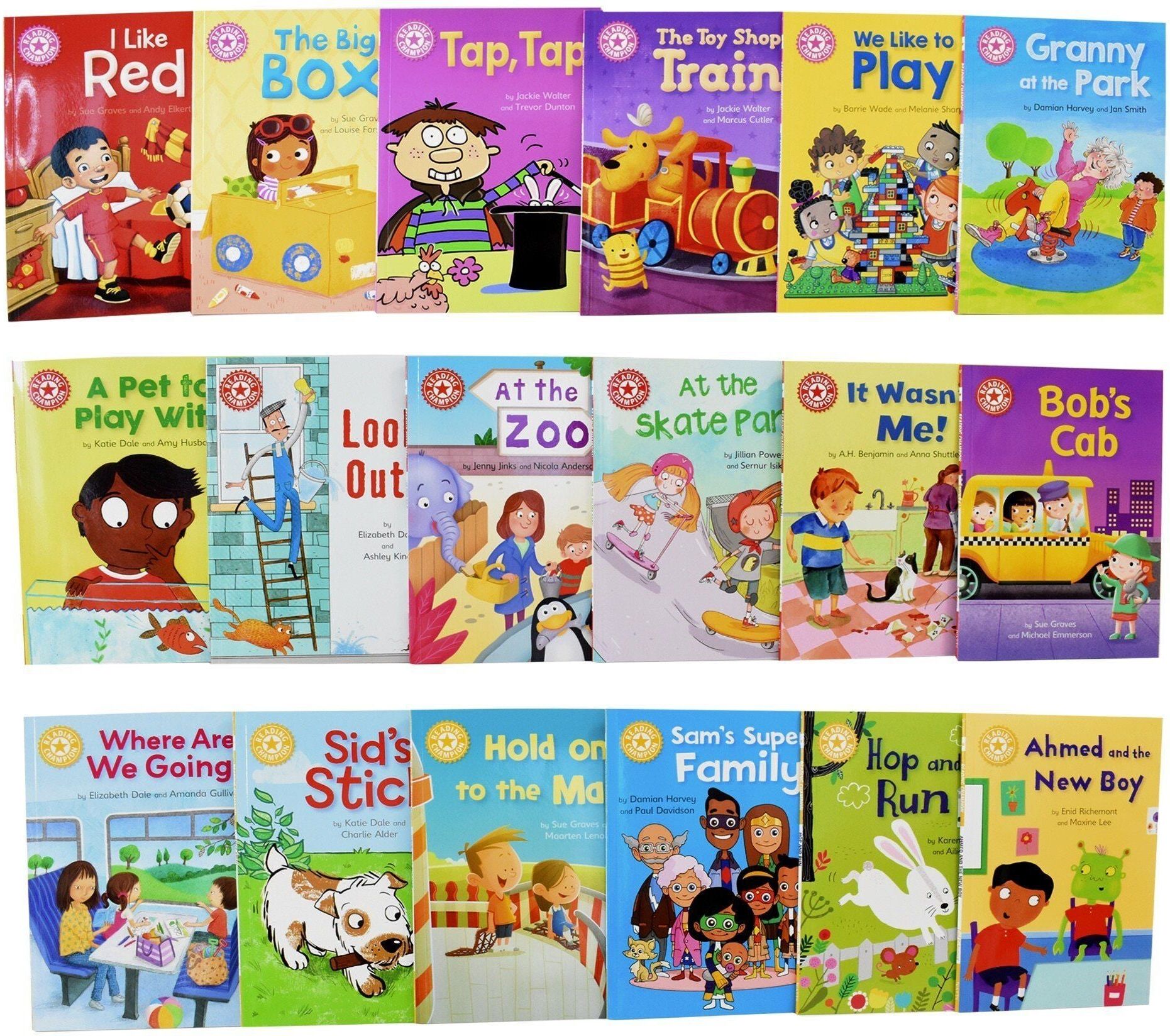
Watts Reading Champion Library for Developing Readers Collection 30 Book Set Series 1 Fun Children's Stories, Early Learning, Literacy Skills & EducationaReading Champion is an independent reading series with a fresh, modern approach. Developed in consultation with UCL Institute of Education (IOE), the books have been specifically written for independent reading and are designed to help children practise and embed their developing reading skills. support you to offer your child a wide range of books to choose from provide opportunity for your child to use and apply the reading skills they have learned in school use common interests and real-life experiences so that your child can identify with characters and settings use clear sentence structures and accessible vocabulary that your child is able to understand easily use natural language patterns so that books can be read aloud and shared with enjoyment and confidence Titles in this collection (30) Pink- I Like Red Pink-The Big Box Pink-Tap,Tap Pink-The Toy Shop Train Pink-Granny at The Park Pink-We Like To Play Red-Bob's Cab Red-It Wasn't Me Red-At The Skate Park Red-At The Zoo Red-Look Out Red- A Pet To Play With Yellow- Ahmed And the New Boy Yellow- Hop And Run Yellow-Sam's Super Family Yellow-Hold On To The Mat Yellow-Sid's Stick Yellow-Where are we going Blue-A windy day Blue-At night Blue-Flip the flamingo Blue-Merlin the mouse Blue-Stuck in the mud Blue-Fun at the beach Green-Hippo's birthday Green-The bunk bed Green-Poppy's project Green-Poor bear Green-Letters from grandpa Green-Sandeep and the dragon Use the book band that your child is reading at school to help them choose a book that is at the right level for their ability. You should decide together whether your child will read the story independently or read it aloud to you. If reading aloud then you should support your child if they hesitate or ask for help. If reading to themselves, remind your child that they can come and ask for help if they get stuck.22,89 £*Shipping: 2,99 £Secure redirect to the provider
-
MACMILLAN Kim Scott Collection 2 Books Set Radical Respect & Radical Candor – Leadership, Communication & Workplace Culture GuidesThe Kim Scott Collection – 2 Books Set brings together two transformative leadership bestsellers: Radical Respect and Radical Candor. Written by acclaimed workplace expert Kim Scott, these books offer practical, honest, and empowering guidance for building stronger teams, better communication, and healthier workplace cultures. In Radical Candor, Scott introduces her now-famous framework:Care Personally + Challenge Directly.Learn how to deliver feedback effectively, build trust, and lead with clarity without becoming overly harsh or avoiding difficult conversations. In Radical Respect, Scott expands on inclusion, fairness, accountability and anti-bullying frameworks—showing readers how to build workplaces rooted in dignity, psychological safety, and genuine respect. Together, these books provide a complete roadmap for leaders, managers, HR teams and anyone who wants to communicate better, lead with courage, and create workplaces where people thrive.6,99 £*Shipping: 2,99 £Secure redirect to the provider
-
Various Publishers How to Talk to Anyone, Next Conversation & Psychology of Management - 3 Book Paperback Set - Communication, Leadership & Management PsychologyThis 3-book collection set brings together three practical, people-focused reads for anyone who wants to communicate better and lead more effectively. Leil Lowndes' classic 'How to Talk to Anyone' pairs with Jefferson Fisher's 'Next Conversation' and a foundational 'Psychology of Management' title to cover everyday conversation, conflict resolution, and workplace psychology in one bundle. Whether you are prepping for interviews, managing a team, or simply want to feel more confident in social situations, this paperback set offers accessible, actionable guidance you can start using immediately. The set includes 'How to Talk to Anyone' by Leil Lowndes, 'Next Conversation' by Jefferson Fisher, and 'Psychology of Management'.20,99 £*Shipping: 2,99 £Secure redirect to the provider
-
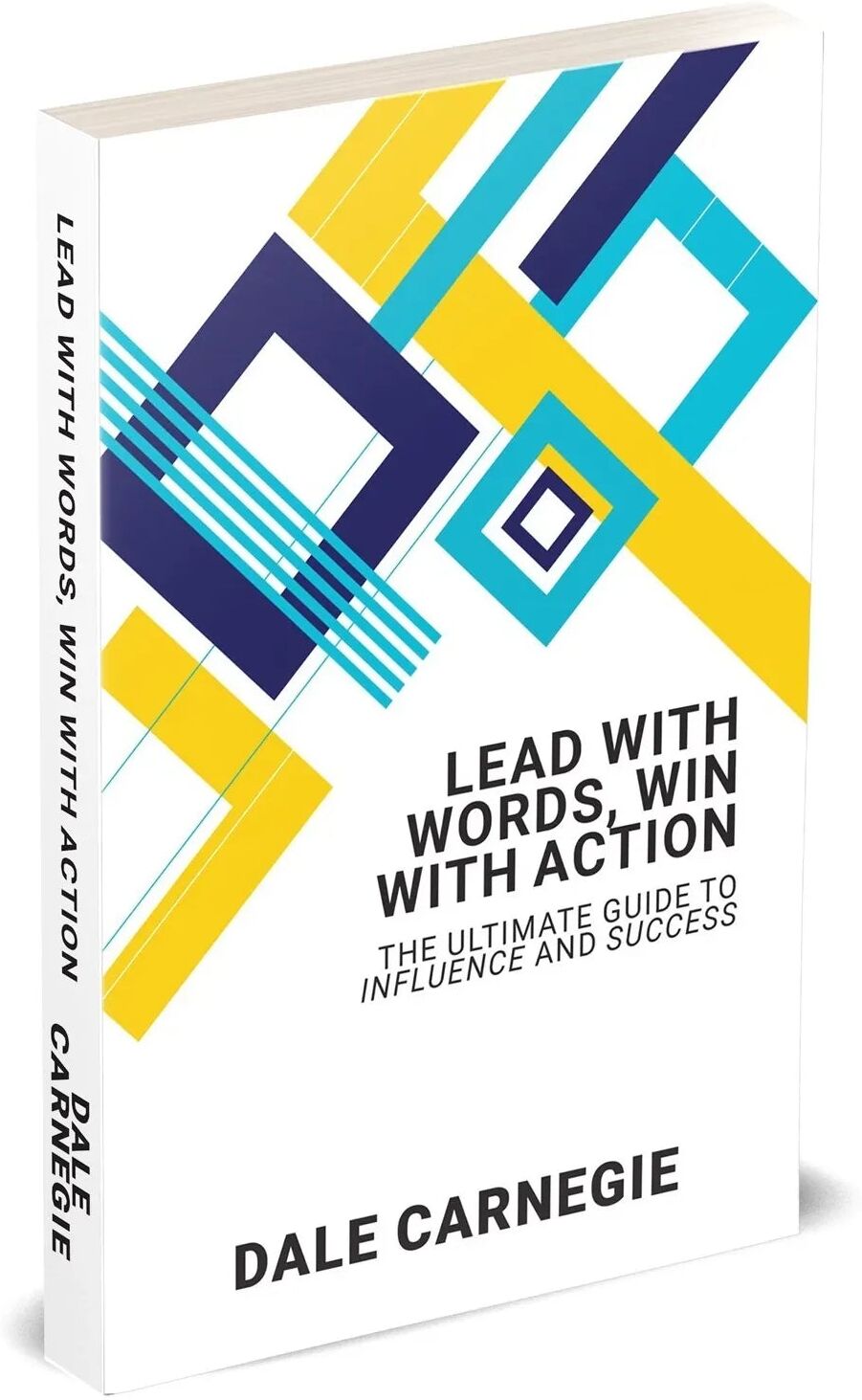
Rupa Publications Lead With Words, Win With Action by Dale Carnegie - Paperback Business & Leadership Self-Help Book - Practical Guide to Influence, CommunicationLead With Words, Win With Action by Dale Carnegie is a practical guide to communicating with confidence and leading with impact. This paperback book distils the enduring principles of Dale Carnegie's philosophy of influence into a modern guide for anyone who wants to build trust, motivate others, and convert conversation into real results. It blends timeless wisdom with actionable strategies for the modern workplace. The book explores how the right combination of language, listening, and follow-through can transform everyday interactions into lasting influence. Chapters cover practical topics such as how to open a conversation, disagree without creating an enemy, and more. Published by Rupa Publications, this book is a concise and energising read for anyone looking to improve their communication skills and leadership abilities.2,99 £*Shipping: 2,99 £Secure redirect to the provider


-
What are the differences between mathematical literacy and mathematics?
Mathematical literacy refers to the ability to understand and use mathematics in everyday life, such as interpreting data, making decisions based on numerical information, and solving practical problems. It focuses on the application of mathematical concepts in real-world situations. On the other hand, mathematics is the academic discipline that involves the study of numbers, quantities, shapes, and patterns, and the relationships between them. It is a more formal and abstract study of mathematical concepts, often involving rigorous proofs and theoretical frameworks. While mathematical literacy emphasizes practical application, mathematics focuses on theoretical understanding and development of mathematical principles. **
-
What are the differences between basic mathematical literacy and mathematics?
Basic mathematical literacy refers to the ability to understand and use fundamental mathematical concepts and skills, such as arithmetic, basic algebra, and geometry, to solve everyday problems. It involves being able to interpret and use numbers, measurements, and basic mathematical operations in practical situations. On the other hand, mathematics encompasses a much broader and deeper understanding of mathematical concepts, theories, and principles. It involves the study of advanced topics such as calculus, statistics, and abstract algebra, and the ability to apply mathematical reasoning and problem-solving skills to complex and theoretical problems. In essence, mathematical literacy is a foundational understanding of basic mathematical concepts, while mathematics involves a more advanced and comprehensive study of the subject. **
-
Should media literacy not become a mandatory subject in schools?
Media literacy should become a mandatory subject in schools because it is essential for students to develop critical thinking skills and the ability to analyze and evaluate media messages. In today's digital age, students are constantly bombarded with information from various sources, and it is crucial for them to be able to discern between credible and unreliable sources. Media literacy also helps students understand the impact of media on society and their own lives, empowering them to make informed decisions. By integrating media literacy into the curriculum, schools can better prepare students to navigate the complex media landscape and become responsible, discerning consumers of information. **
-
What is the difference between collaboration and cooperation?
Collaboration involves individuals or groups working together towards a common goal, often involving shared responsibilities, resources, and decision-making. It requires a higher level of engagement and interaction among participants. On the other hand, cooperation is more about individuals or groups working alongside each other, each contributing their efforts towards a shared objective without necessarily sharing the same level of involvement or decision-making. Cooperation may involve less direct interaction and coordination compared to collaboration. **

Does anyone know good arguments for why media literacy is so important?
Media literacy is crucial in today's digital age because it helps individuals critically analyze and evaluate the information they consume. By understanding how media messages are constructed and the potential biases they may contain, people can make more informed decisions and avoid being manipulated by false or misleading content. Media literacy also empowers individuals to be active and responsible participants in society, enabling them to engage in meaningful discussions, challenge misinformation, and contribute to a more informed and democratic society. **
When can one expect measures to promote media literacy in children and adolescents?
Measures to promote media literacy in children and adolescents can be expected to be implemented in educational settings, such as schools and after-school programs. Additionally, parents and caregivers can also play a crucial role in promoting media literacy by engaging in conversations with their children about media content and teaching them critical thinking skills. Furthermore, government and non-profit organizations may also implement initiatives to promote media literacy through public awareness campaigns and policy advocacy. Overall, promoting media literacy in children and adolescents is an ongoing effort that involves collaboration between various stakeholders. **
Top-Angebote
Products related to Literacy:
-
Learning Resources Alphabet Coffee Cups - 52-Piece Set for Toddlers - Early Literacy Toy - Learning ResourcesDevelop early literacy skills with the Learning Resources Alphabet Coffee Cups. This 52-piece set includes 26 toy coffee cups and 26 matching snap-on lids, each featuring an uppercase letter on the cup and the corresponding lowercase letter on the lid. Children can match the letters together, practice recognising the alphabet, and explore beginning sounds as they play. The cups can be used for imaginative role play, such as running a pretend café or play kitchen, and can also be sorted by colour, arranged in alphabetical order, or used for group activities in early-years classrooms and nurseries. The cups and lids are made of durable plastic and can be stored in the reusable plastic bucket when not in use.16,36 £*Shipping: 3,95 £Secure redirect to the provider
-
Templar Books The Colour Monster: A Colour Activity Book by Anna Llenas - Paperback - Ages 3-7 - Emotional Literacy Colouring & Activity BookThe Colour Monster: A Colour Activity Book by Anna Llenas is a bright, hands-on companion to the internationally loved Colour Monster picture book. Designed for children aged 3-7, this 48-page paperback invites young readers to explore emotions through colouring, tracing and imaginative prompts. Following Colour Monster's mixed-up feelings, kids match colours to moods, building emotional vocabulary while having fun. This activity book is perfect for home, nursery or classroom use, making it a great tool for quiet activity time and self-expression. Colour has always been at the heart of the Colour Monster story, and this activity book brings that idea vividly to life for little hands. Across 48 colourful pages, children are asked how Colour Monster is feeling in each scene, then invited to choose the appropriate colour to match their mood. Published by Templar Books, this book is a great way to encourage children to express themselves and explore their emotions through colouring and creativity.11,99 £*Shipping: 2,99 £Secure redirect to the provider
-
Watts Reading Champion Library for Developing Readers Collection 30 Book Set Series 1 Fun Children's Stories, Early Learning, Literacy Skills & EducationaReading Champion is an independent reading series with a fresh, modern approach. Developed in consultation with UCL Institute of Education (IOE), the books have been specifically written for independent reading and are designed to help children practise and embed their developing reading skills. support you to offer your child a wide range of books to choose from provide opportunity for your child to use and apply the reading skills they have learned in school use common interests and real-life experiences so that your child can identify with characters and settings use clear sentence structures and accessible vocabulary that your child is able to understand easily use natural language patterns so that books can be read aloud and shared with enjoyment and confidence Titles in this collection (30) Pink- I Like Red Pink-The Big Box Pink-Tap,Tap Pink-The Toy Shop Train Pink-Granny at The Park Pink-We Like To Play Red-Bob's Cab Red-It Wasn't Me Red-At The Skate Park Red-At The Zoo Red-Look Out Red- A Pet To Play With Yellow- Ahmed And the New Boy Yellow- Hop And Run Yellow-Sam's Super Family Yellow-Hold On To The Mat Yellow-Sid's Stick Yellow-Where are we going Blue-A windy day Blue-At night Blue-Flip the flamingo Blue-Merlin the mouse Blue-Stuck in the mud Blue-Fun at the beach Green-Hippo's birthday Green-The bunk bed Green-Poppy's project Green-Poor bear Green-Letters from grandpa Green-Sandeep and the dragon Use the book band that your child is reading at school to help them choose a book that is at the right level for their ability. You should decide together whether your child will read the story independently or read it aloud to you. If reading aloud then you should support your child if they hesitate or ask for help. If reading to themselves, remind your child that they can come and ask for help if they get stuck.22,89 £*Shipping: 2,99 £Secure redirect to the provider
-
MACMILLAN Kim Scott Collection 2 Books Set Radical Respect & Radical Candor – Leadership, Communication & Workplace Culture GuidesThe Kim Scott Collection – 2 Books Set brings together two transformative leadership bestsellers: Radical Respect and Radical Candor. Written by acclaimed workplace expert Kim Scott, these books offer practical, honest, and empowering guidance for building stronger teams, better communication, and healthier workplace cultures. In Radical Candor, Scott introduces her now-famous framework:Care Personally + Challenge Directly.Learn how to deliver feedback effectively, build trust, and lead with clarity without becoming overly harsh or avoiding difficult conversations. In Radical Respect, Scott expands on inclusion, fairness, accountability and anti-bullying frameworks—showing readers how to build workplaces rooted in dignity, psychological safety, and genuine respect. Together, these books provide a complete roadmap for leaders, managers, HR teams and anyone who wants to communicate better, lead with courage, and create workplaces where people thrive.6,99 £*Shipping: 2,99 £Secure redirect to the provider
-
What does media literacy mean?
Media literacy refers to the ability to access, analyze, evaluate, and create media in a variety of forms. It involves understanding how media messages are constructed, and being able to critically assess the information and ideas presented. Media literacy also includes the skills to effectively communicate through media, and to use media in a responsible and ethical manner. Overall, media literacy empowers individuals to be informed and active participants in our media-saturated society. **
-
Does the truth really need media literacy?
Yes, the truth does need media literacy. Media literacy helps individuals critically analyze and evaluate the information they consume, enabling them to discern between factual information and misinformation. In today's digital age, where information is easily accessible and can be easily manipulated, media literacy is essential for ensuring that the truth is not distorted or misrepresented. By being media literate, individuals can better navigate the vast amount of information available to them and make informed decisions based on accurate and reliable sources. **
-
What are the differences between mathematical literacy and mathematics?
Mathematical literacy refers to the ability to understand and use mathematics in everyday life, such as interpreting data, making decisions based on numerical information, and solving practical problems. It focuses on the application of mathematical concepts in real-world situations. On the other hand, mathematics is the academic discipline that involves the study of numbers, quantities, shapes, and patterns, and the relationships between them. It is a more formal and abstract study of mathematical concepts, often involving rigorous proofs and theoretical frameworks. While mathematical literacy emphasizes practical application, mathematics focuses on theoretical understanding and development of mathematical principles. **
-
What are the differences between basic mathematical literacy and mathematics?
Basic mathematical literacy refers to the ability to understand and use fundamental mathematical concepts and skills, such as arithmetic, basic algebra, and geometry, to solve everyday problems. It involves being able to interpret and use numbers, measurements, and basic mathematical operations in practical situations. On the other hand, mathematics encompasses a much broader and deeper understanding of mathematical concepts, theories, and principles. It involves the study of advanced topics such as calculus, statistics, and abstract algebra, and the ability to apply mathematical reasoning and problem-solving skills to complex and theoretical problems. In essence, mathematical literacy is a foundational understanding of basic mathematical concepts, while mathematics involves a more advanced and comprehensive study of the subject. **
Similar search terms for Literacy
-
Various Publishers How to Talk to Anyone, Next Conversation & Psychology of Management - 3 Book Paperback Set - Communication, Leadership & Management PsychologyThis 3-book collection set brings together three practical, people-focused reads for anyone who wants to communicate better and lead more effectively. Leil Lowndes' classic 'How to Talk to Anyone' pairs with Jefferson Fisher's 'Next Conversation' and a foundational 'Psychology of Management' title to cover everyday conversation, conflict resolution, and workplace psychology in one bundle. Whether you are prepping for interviews, managing a team, or simply want to feel more confident in social situations, this paperback set offers accessible, actionable guidance you can start using immediately. The set includes 'How to Talk to Anyone' by Leil Lowndes, 'Next Conversation' by Jefferson Fisher, and 'Psychology of Management'.20,99 £*Shipping: 2,99 £Secure redirect to the provider
-
Rupa Publications Lead With Words, Win With Action by Dale Carnegie - Paperback Business & Leadership Self-Help Book - Practical Guide to Influence, CommunicationLead With Words, Win With Action by Dale Carnegie is a practical guide to communicating with confidence and leading with impact. This paperback book distils the enduring principles of Dale Carnegie's philosophy of influence into a modern guide for anyone who wants to build trust, motivate others, and convert conversation into real results. It blends timeless wisdom with actionable strategies for the modern workplace. The book explores how the right combination of language, listening, and follow-through can transform everyday interactions into lasting influence. Chapters cover practical topics such as how to open a conversation, disagree without creating an enemy, and more. Published by Rupa Publications, this book is a concise and energising read for anyone looking to improve their communication skills and leadership abilities.2,99 £*Shipping: 2,99 £Secure redirect to the provider
-
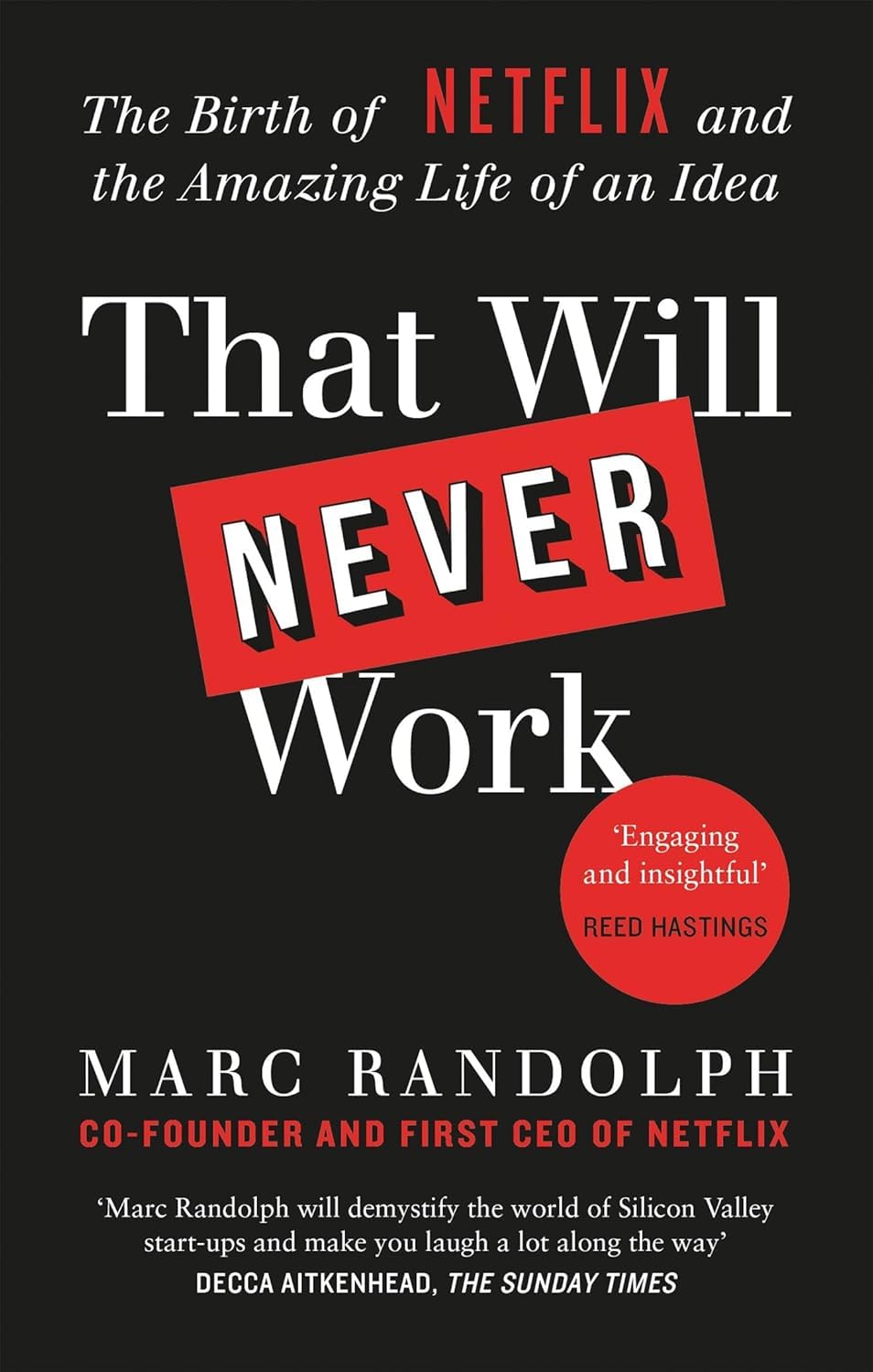
Various Publishers The Diary of a CEO, That Will Never Work & Fierce Conversations 3 Book Paperback Set - Business, Leadership & Communication Skills CollectionThis three-book paperback set brings together some of the sharpest voices in modern business thinking. The set includes The Diary of a CEO, That Will Never Work, and Fierce Conversations. Written by Steven Bartlett, Marc Randolph, and Susan Scott, these books offer timeless lessons from entrepreneurship and thousands of podcast conversations, the extraordinary true story of building Netflix from scratch, and the art of honest, high-impact conversation. Together they form a practical toolkit for anyone building a career, a company, or simply better relationships through clearer communication.29,99 £*Shipping: 2,99 £Secure redirect to the provider
-
Wilco International LLP How to Win Friends and Influence People by Dale Carnegie Classic Self Help Book on Communication, Leadership, Confidence & Personal DevelopmentDiscover one of the world's best-known personal development books with How to Win Friends and Influence People by Dale Carnegie. First published in 1936, this enduring classic presents practical principles for communicating effectively, building positive relationships and working successfully with other people. Through memorable examples and straightforward advice, Carnegie explores how to make a positive impression, handle disagreements constructively, encourage cooperation and become a more effective communicator. The principles can be applied across everyday life, from personal relationships and social situations to business, management, sales, networking and leadership. Accessible and practical, How to Win Friends and Influence People remains popular with readers interested in improving their communication skills, confidence, interpersonal relationships and professional development. Key Features Classic personal development book by Dale Carnegie Practical principles for improving communication Explores relationships, leadership and interpersonal skills Useful for business, management, sales and networking Helps readers understand effective people skills Suitable for personal and professional development Excellent gift for entrepreneurs, managers and self-improvement readers9,99 £*Shipping: 2,99 £Secure redirect to the provider
-
Should media literacy not become a mandatory subject in schools?
Media literacy should become a mandatory subject in schools because it is essential for students to develop critical thinking skills and the ability to analyze and evaluate media messages. In today's digital age, students are constantly bombarded with information from various sources, and it is crucial for them to be able to discern between credible and unreliable sources. Media literacy also helps students understand the impact of media on society and their own lives, empowering them to make informed decisions. By integrating media literacy into the curriculum, schools can better prepare students to navigate the complex media landscape and become responsible, discerning consumers of information. **
-
What is the difference between collaboration and cooperation?
Collaboration involves individuals or groups working together towards a common goal, often involving shared responsibilities, resources, and decision-making. It requires a higher level of engagement and interaction among participants. On the other hand, cooperation is more about individuals or groups working alongside each other, each contributing their efforts towards a shared objective without necessarily sharing the same level of involvement or decision-making. Cooperation may involve less direct interaction and coordination compared to collaboration. **
-
Does anyone know good arguments for why media literacy is so important?
Media literacy is crucial in today's digital age because it helps individuals critically analyze and evaluate the information they consume. By understanding how media messages are constructed and the potential biases they may contain, people can make more informed decisions and avoid being manipulated by false or misleading content. Media literacy also empowers individuals to be active and responsible participants in society, enabling them to engage in meaningful discussions, challenge misinformation, and contribute to a more informed and democratic society. **
-
When can one expect measures to promote media literacy in children and adolescents?
Measures to promote media literacy in children and adolescents can be expected to be implemented in educational settings, such as schools and after-school programs. Additionally, parents and caregivers can also play a crucial role in promoting media literacy by engaging in conversations with their children about media content and teaching them critical thinking skills. Furthermore, government and non-profit organizations may also implement initiatives to promote media literacy through public awareness campaigns and policy advocacy. Overall, promoting media literacy in children and adolescents is an ongoing effort that involves collaboration between various stakeholders. **
* All prices are inclusive of VAT and, if applicable, plus shipping costs. The offer information is based on the details provided by the respective shop and is updated through automated processes. Real-time updates do not occur, so deviations can occur in individual cases. ** Note: Parts of this content were created by AI.